
Peruvian Purple Corn
Rich in anthocyanins, flavonoids with antioxidant properties
What is purple corn?
Called “kculli” by the Incas, purple corn (or purple corn) is grown in Peru at over 3,000 meters above sea level. Rich in anthocyanins, which give it its sublime purple color, purple corn has many properties and health benefits. It is a natural source of antioxidants and anti-radicals.

The origin of purple corn
Purple corn is a cereal consumed for over 2500 years by the Incas, especially in the form of drink. The Mochica culture mentions it on ceramics dating from the pre-Inca culture. A civilization known to be the cradle of potato production, the Incas were also great corn growers; they were able to create new varieties of this cereal, adapted to the climate and relief so particular to Peru. Purple corn comes from these trials. With its remarkable colour, the Incas already recognized its exceptional virtues and used it a lot in cooking.
Its nutritional qualities give it many benefits. Nowadays it is found in South America, mainly in Peru and in the Andes where it is cultivated at more than 3,000 metres above sea level in the cities of Lima, Ancash and Arequipa. It is also cultivated on the coasts. Production is also beginning to be found in Europe, North America and Australia, but these produce products that are less nutritionally rich than the varieties grown in Peru. Indeed, the mauve corn is an endemic botanical variety, which means that it depends completely on its ecosystem and its environment: if it does not suit it, it can turn yellow again! The climate, the relief, the properties of the Andean water are therefore part of its incredible benefits.
Purple corn is consumed all year round in Peru. Nevertheless, its consumption explodes in Lima during the month of October, the month of the “Lord of Miracles” (Señor de los milagros) also called the “purple month” (el mes morado): the faithful dressed in mauve cross the city in honor of the purple Christ.
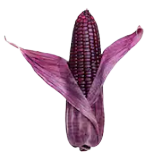
As its name suggests, the corn has a beautiful purple-purple colour. There are different varieties of purple corn according to the different production regions of Peru.
Purple corn is a "Super Food"
Rich in anthocyanins, which give it its sublime purple color, purple corn has many properties and health benefits.
Purple corn has a very high concentration of anthocyanins, 4 or 5 times higher than blueberries for example. This concentration of natural antioxidants makes it a “superfood”.
Benefits of anthocyanins
- Aid in the production of collagen and elastin
- Anti-aging function
- Protective action on cells
- Anti-inflammatory action
- Fight against cholesterol
- Protection of the blood vessels
Fight against aging
Cardiovascular system health
Anti-inflammatory properties
Improved blood circulation
You want to know all about Purple Corn?
Native to the Peruvian Andes, purple corn has been used for millennia by Peruvians for its incredible benefits.
Discover its therapeutic properties.
Subscribe to our newsletter to receive information about purple corn and take advantage of business opportunities for our partners.
The benefits and virtues of purple corn
First of all, it is worth pointing out that, being little known and produced by intensive agriculture, purple corn is preserved from all traces of GMOs. Today, purple maize is becoming more and more widespread. Its nutritional qualities and richness are also increasingly renowned.
Its properties come from two chemical compounds: anthocyanins and phenolics.
It is the anthocyanins that give the pretty purple colour to the corn. This natural pigment is found in many other plants, mainly flowers and fruits such as blackberries, blueberries, eggplants and vitellota potatoes. The other quality of anthocyanin is its richness in natural antioxidants.
Purple corn has a very high concentration of anthocyanins, 4 to 5 times higher than blueberries for example. This concentration of natural antioxidants makes it a “super food”.
Anthocyanins have many properties and health benefits:
– They act on the production of collagen and elastin to give elasticity and tone to tissues.
– They play an anti-ageing role, particularly in the appearance of fine lines and wrinkles.
– They have an action on our cells: for example, they retain toxins.
– They have an anti-inflammatory action.
– They help to fight against cholesterol and reduce it.
– They protect the blood vessels.
– They improve microcirculation.
Concerning the phenolics that purple corn contains in significant quantities, they are very interesting chemical compounds for the cardiovascular system in particular because they preserve the arteries, help reduce blood pressure and prevent the formation of clots.
Other natural properties of purple corn have also been studied. Purple corn contains many vitamins such as vitamin B3, vitamin B2 and vitamin B1, as well as iron, potassium and manganese. It is believed to fix iron, aid cell repair and regulate the hormonal system.
Its lipidic contribution helps to fight against dryness, mood disorders and premenstrual syndrome.
Purple corn is also believed to have a positive effect on cancer. Studies carried out on rats show its effectiveness against the development of certain tumours. In particular, it is believed to help prevent the development of colon cancer.
It would also have an action in the treatment of obesity, combined with a balanced, healthy and varied diet. Purple corn is therefore a slimming ally: it tones the silhouette, helps to fight against snacking, develops muscle mass and helps to avoid cramps during intensive sports practice.

Nutritional value of purple corn
For 100 grams of purple corn, here is the average nutritional value:
Calories = 500 Kcal
Protein = 20 g (about 10%)
Fatty acids and lipids = 23 g (about 7%)
Carbohydrates = 11 g (approx. 80%)
Purple corn is therefore an extraordinary source of energy. Although low in fibre (about 1.8 grams per 100 grams), it is a natural source of vitamins and minerals. Compared to yellow maize, it contains for example 50% more iron, potassium and manganese. It contains about 60% more starch. It is also a certified gluten-free product and is therefore very suitable for people with intolerances.
How to cook purple corn
Although you can of course use whole maize in your dishes, most of the time industrialists and producers reduce it to flour or crush it to make it easier to eat. Its taste is rather sweet or even neutral, with a subtle sweet note. In fact its taste is quite similar to that of yellow corn.
You can use purple popcorn in several ways: in your mashed potatoes or vegetables, or with other cereals or legumes such as rice or bulgur. It can also be used as a decoction or infusion, also in fruit or vegetable smoothies.
In the form of flour, you can make pastries and breads. It goes very well with chocolate for example. In Peru, and more precisely in Lima, it is used in the recipe of a dessert called “mazamorra morada”: a small purple corn puree to which various spices such as cinnamon or vanilla are added. Purple corn flour can be used as a substitute for wheat flour. It is a certified gluten-free food and is therefore suitable for people with food intolerances.
Purple corn will add colour to your dishes and brighten up your daily meals. Prefer to use products from organic farming, without pesticides, colouring agents or preservatives.
La chicha morada
In the Inca culture, purple corn is mainly used in the preparation of a non-alcoholic drink, known to be refreshing and invigorating: chicha morada. It is the emblematic drink of Peru, particularly of the Andes. It is consumed by the whole family and can be drunk hot or cold depending on the season. It preserves the purple colour of the corn.
For the anecdote, the consumption of chicha morada in Peru has even reached that of Coca-Cola. The drink is sold in all restaurants, supermarkets and gas stations. Today it is produced by the food industry.
To taste the authentic chicha morada, pour 250 millilitres of boiling water over a tablespoon of purple corn flour. Leave to infuse for about ten minutes. Filter the mixture and add about 750 millilitres of apple juice. The drink is to be enjoyed very fresh.
You can also add spices such as cinnamon or cloves. Peruvians also sometimes use pineapple peel in the decoction to give a more fruity taste. You can also add a dash of lemon at the end of your blend for a refreshing thirst-quenching effect.
Purple corn as a dietary supplement
If the grains are used in cooking, it is important to know that its nutritional intake and benefits are mainly concentrated in the purple corn stalk. If you don’t have the time or the desire to start cooking, you should know that food supplements exist and will allow you to benefit from its extraordinary nutritional qualities.
– Dosage for taking purple corn in capsule form: take 2 to 3 capsules half an hour before the meal.
Pay attention to the quality of the supplements that you consume: they must not contain any colouring, preservatives or cutting agents. Prefer 100% natural and pure products.
Some precautions about purple corn
No side effects have been reported in the context of normal consumption and linked to a varied and balanced diet. Nevertheless, avoid consuming too much to avoid any intestinal disorder.
For pregnant and breastfeeding women, avoid excessive consumption because purple corn was used in the Inca culture to stimulate the uterus and it could cause cases of involuntary abortion.
People suffering from hypotension should also avoid its consumption.
